Governor vetoes advertising bill benefiting Maryland news outlets
Published in News & Features
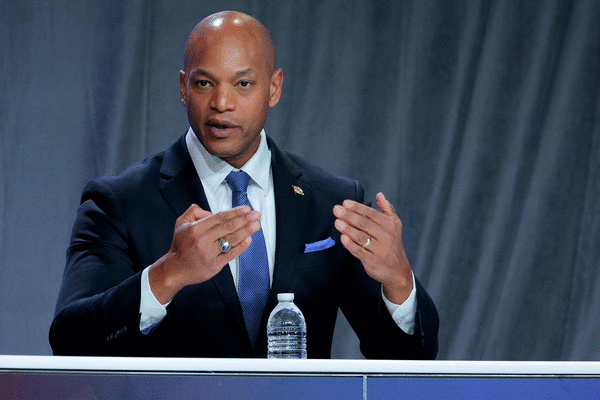
Gov. Wes Moore vetoed a bill that was backed by Maryland media organizations that sought to steer more state advertising dollars to local news outlets.
The Local News for Maryland Communities Act of 2026, also known as Senate Bill 459, would have established a goal for state agencies to spend at least 50% of their advertising budgets with Maryland news organizations. The measure exempted campaigns aimed at out-of-state audiences, including tourism and recruitment advertising.
The bill’s third reader passed the General Assembly’s Senate unanimously both times and went 129-7 in the House of Delegates.
Supporters said the bill would provide financial support to local journalism without requiring additional state spending. They also argued it could serve as a model for other states looking to bolster local media.
At the time of the bill’s passage April 13, the Maryland-Delaware-DC Press Association and News/Media Alliance praised the measure as a way to strengthen community news organizations across the state.
“Maryland lawmakers, led by Senator (James C.) Rosapepe and Delegate (Linda) Foley, are showing the way for other states to provide support for local journalism and the communities served by our publishers,” Danielle Coffey, president and CEO of the News/Media Alliance, said in an April statement.
Rebecca Snyder, executive director of the MDDC Press Association, said in a statement last month that the bill treated local news like “essential infrastructure.”
“By directing existing resources more intentionally, Maryland is strengthening the systems people rely on for timely, fact-based information. It also changes the conversation: sustainable support for local media can be built into everyday government operations,” Snyder said.
Moore, however, wrote Friday that the bill would “impair the state’s ability to communicate effectively with Maryland residents,” questioning the effectiveness of traditional media in reaching Marylanders.
Modern advertising, including on digital platforms and streaming services, “allow the State to reach a broad and diverse audience where they receive their information,” the governor wrote. The widespread use of paywalls in online news also means Maryland’s messaging might reach fewer people, he said.
“A mandate directing State advertising funds to outlets whose contents are accessible only to paying subscribers does not serve the State’s interest in reaching the broadest possible audience,” Moore said. “Effective public communication requires that the State’s advertising investment generate a measurable return in reach, engagement, and delivery to the communities that need it most.”
Alongside other objections about out-of-state media ownership and financial risk for the state, Moore ultimately saw the bill’s mandate as either forcing the state to spend more on advertising to maintain its current reach and effectiveness or to reduce its reach and remain within the budget.
“It is my assessment that neither outcome serves the public interest. The first places an unnecessary and unbudgeted burden on State resources. The second diminishes the state’s ability to communicate with Marylanders,” Moore wrote.
Synder, head of MDDC, called the veto “a disappointing and misguided decision” in a statement Saturday.
“Other jurisdictions across the country have already adopted similar approaches because they recognize that government advertising dollars can help sustain local media ecosystems without expanding government spending. Maryland had the opportunity to join them with a balanced, bipartisan solution,” she wrote.
The bill’s sponsors did not immediately respond to requests for comment Saturday. The News/Media Alliance’s president was unavailable to comment.
The governor said his administration looks forward to working with the lawmakers to pursue executive actions or other legislation to support local news “in a manner that is feasible, fiscally sound, and consistent with the State’s obligations to all Marylanders it serves.”
©2026 Baltimore Sun. Visit baltimoresun.com. Distributed by Tribune Content Agency, LLC.




Comments